
Korean Army Stew Recipe (Budae Jjigae) - Easy 10-Minute Meal
Korean Army Stew (Budae Jjigae, 부대찌개) is a spicy Korean soup born after the Korean War, combining American staples like spam, hot dogs, and baked beans with traditional Korean ingredients like kimchi, gochujang, and noodles. It's a quick, flavorful one-pot meal ready in just 10 minutes.
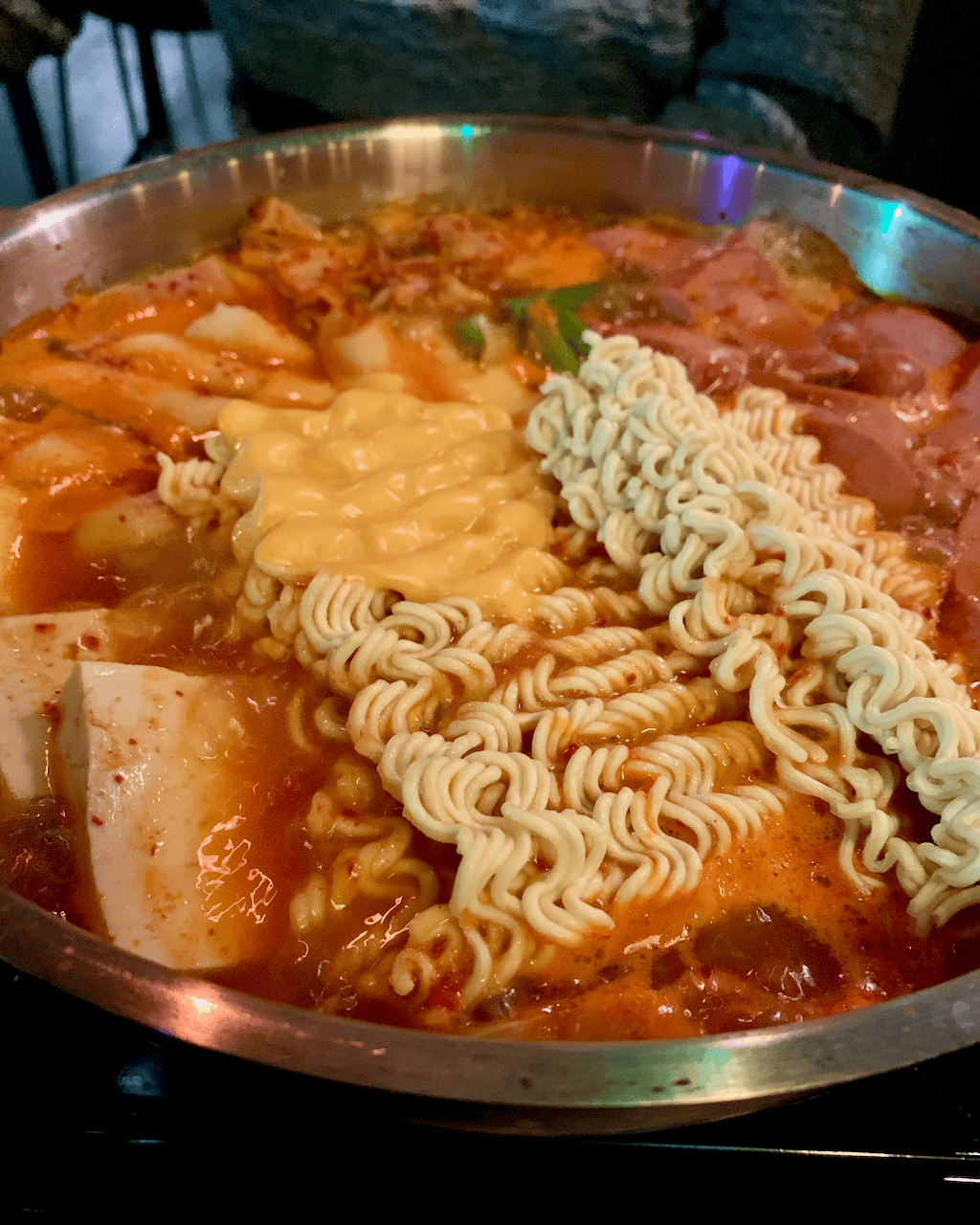
Why Korean Army Stew Is My Go-To Easy Dinner
Ever since the first time I sat down to a bubbling cauldron of Korean Army Stew, (Budae Jjigae in Korean), I was hooked. Not too long after that, I realized how fun and easy it is and started making it at home. It is the best thing for those evenings when we are tempted to order takeout, but remember that we're gonna be out 60 bucks and not that satisfied at the end of the day. I can't imagine an easier way to satisfy my spicy noodle soup cravings.
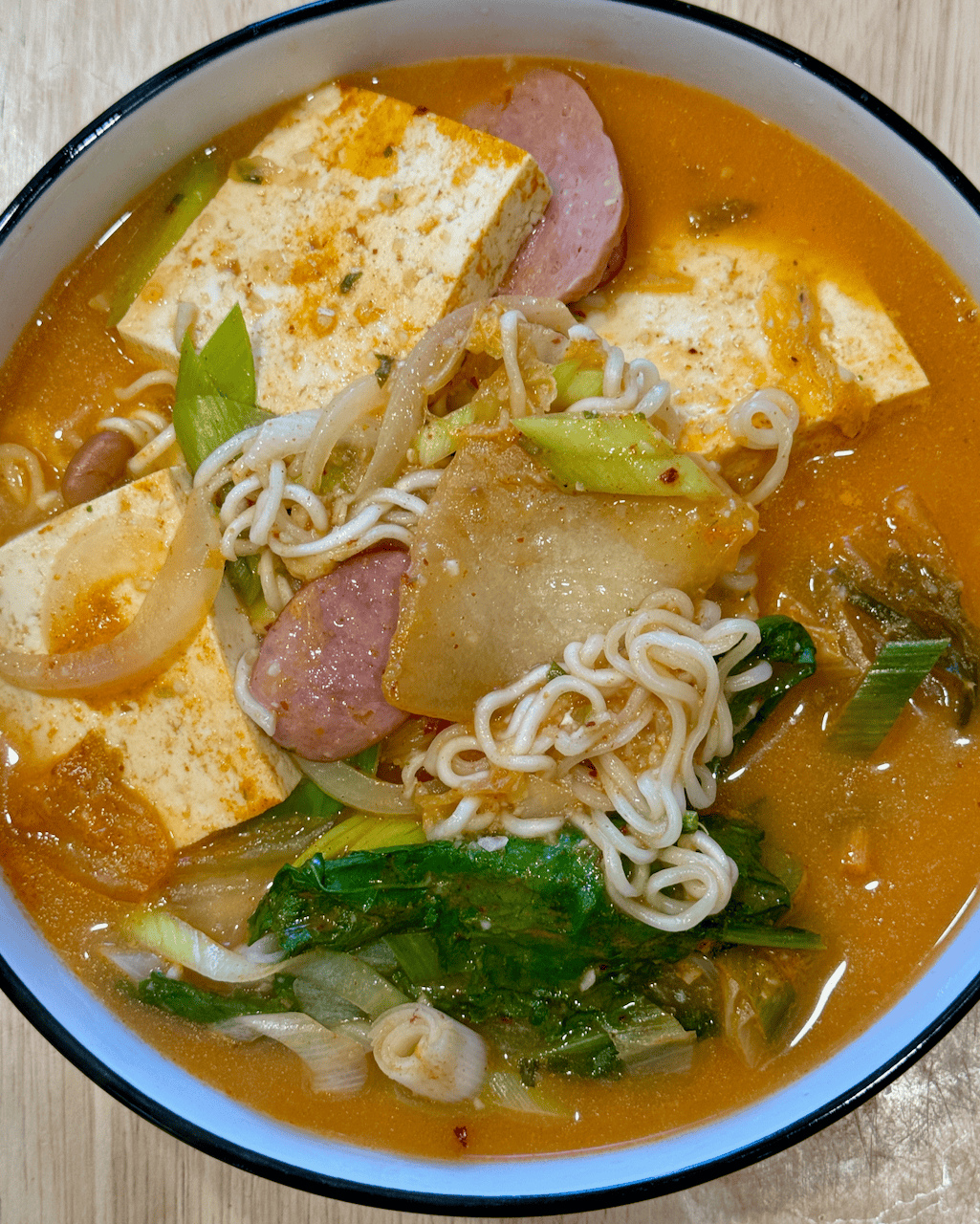
It leans heavily on store bought (yes, highly processed) ingredients, but it also leaves a lot of room for customization. Heck, depending on how many veggies you add, it can even end up being pretty nourishing!
Deepening my Love of Army Stew in Seoul
I recently traveled to Seoul and Korean Army Stew was one of the absolute highlights. There's something special about eating it in its home country-the way it bubbles away at your table, the perfect balance of spicy, savory, and comforting flavors. That trip solidified my love for this dish, and now I make it at home constantly to recreate those cozy Seoul vibes. Next time, I'm bringing friends!
If you're planning your own trip to Seoul, I highly recommend Seoul Foodventure for cooking classes and market tours, and Mike from Itseoulgood does amazing food tours and personalized experiences. You will eat and drink things you would never discover otherwise!
What Makes Korean Army Stew So Special?
It's Ridiculously Quick and Easy
Korean army stew takes less than 10 minutes to make, and the steps could not be simpler. It's just a matter of cutting everything up, putting it into shallow pot and cooking it until the noodles are cooked.
The Flavor Is Absolutely Packed
It uses a combination of spicy funky kimchi and gochujang, (a delicious Korean red pepper paste), as well as meaty stock in the form of homemade stock or stock powder or even just the ramen packet that comes in the ramen.
Plus: You get smoky flavors from smoked sausages or hotdog and spam or some kind of other smoky ham like product and fresh flavors from garlic and veggies. I like to use onions, leeks, green onions, some kind of leafy green like radish leaves or spinach or even broccoli and the silky satisfying creaminess of tofu.
How to Make Korean Army Stew
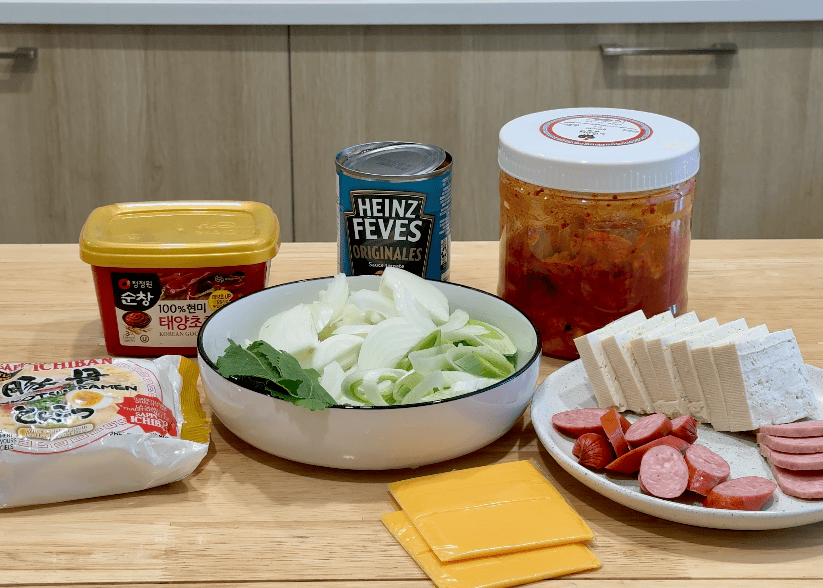
Ingredients You'll Need
The beauty of this dish is in its simplicity. You'll need:
- Veggies: Onions, leeks or green onions, and garlic is a good start, but you can amp up the veg with leafy greens, cabbage, broccoli, turnips, or just about anything you can think of.
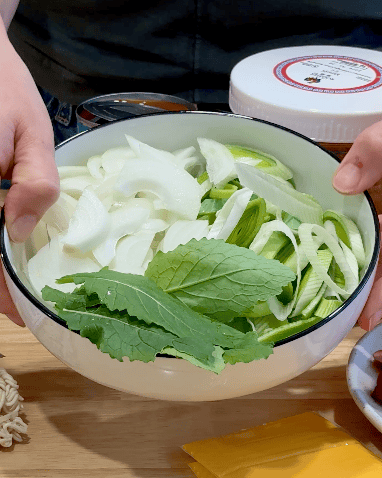
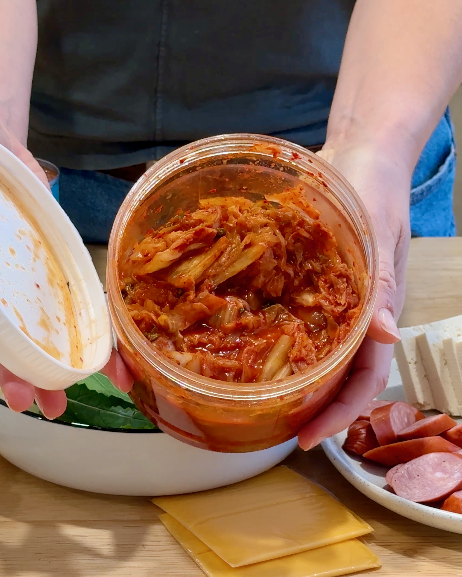
- Kimchi: It's basically Korean sauerkraut and it adds spice, crunch, and funkiness to the broth.
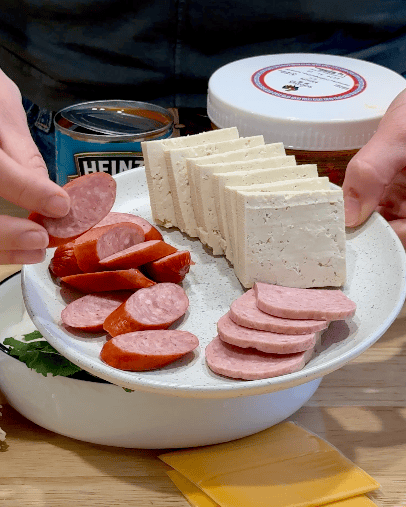
- Tofu: Firm or medium firm, so it holds together as it cooks. Tofu adds lovely texture and soaks up the intense flavors of the broth.
- Smoked sausage or cut up hot dogs: Smoky pork products add so much flavor and protein to make this stew super satiating.
- Spam or another ham product: Optional, but spam is a pretty common ingredient in Army Stew because it gained popularity following the Korean war, when this stew was invented.
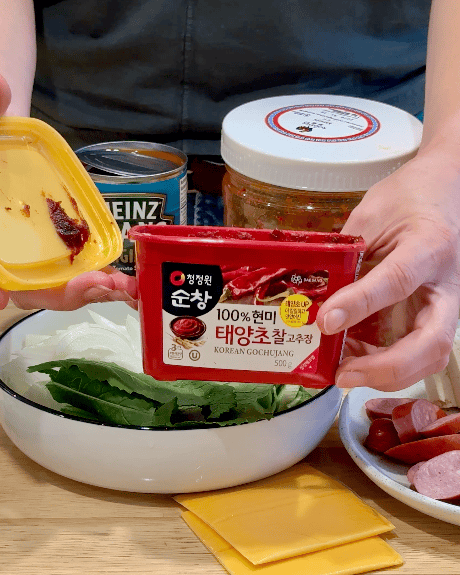
- Gochujang: For spice and umami
- Baked beans: Beans add sweetness, fiber, protein, and satisfying creaminess.

- A ramen packet with seasoning: If you prefer homemade broth, feel free to ditch the packet, but I like using it because it's so easy. (It's right there in the packet!)
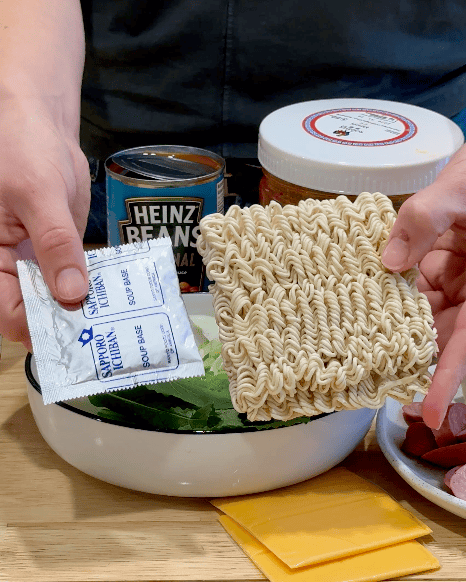
- Processed cheese: A non-negotiable in my opinion. Processed (plastic cheese) dissolves into the broth making it super creamy and addictive.
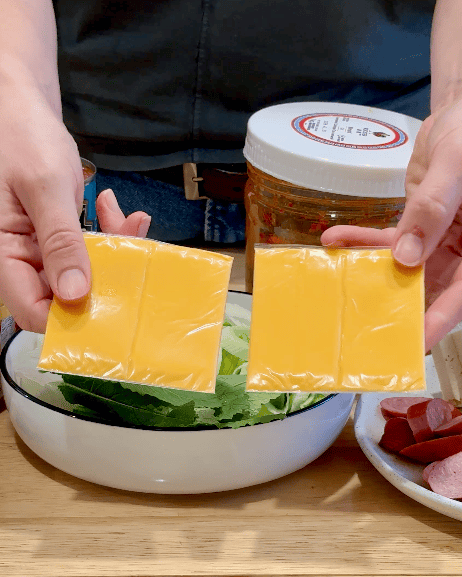
Optional extra ingredients:
- Korean rice cakes for chewiness
- Frozen corn for bursts of sweetness
- Jammy eggs for richness
how do you make Korean army stew?
It's the easiest thing you can imagine:
Step 1: Put everything in a pot. I like to use a wide skillet or a shallow cast enamel pot with a lid.
Step 2: Partially cover the ingredients with hot water and bring the whole thing to a boil.
Step 3: Cook, stirring occasionally, until the noodles are cooked and the onions and leeks are soft.
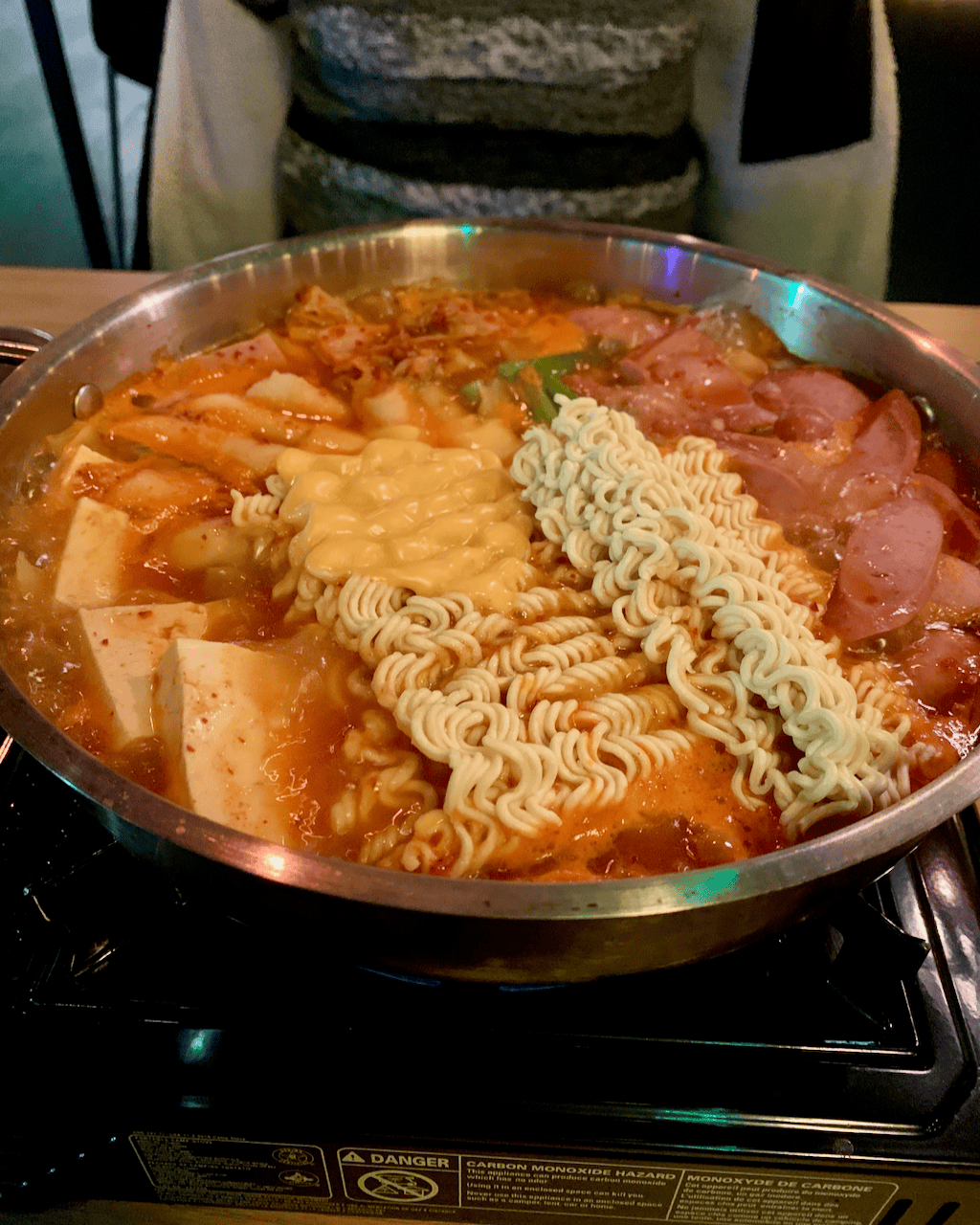
If you're having people over, it's fun to cook this in the middle of a table for that authentic Korean restaurant feeling. Everyone can give it a stir and serve themselves for a more interactive experience.
Serving Suggestions
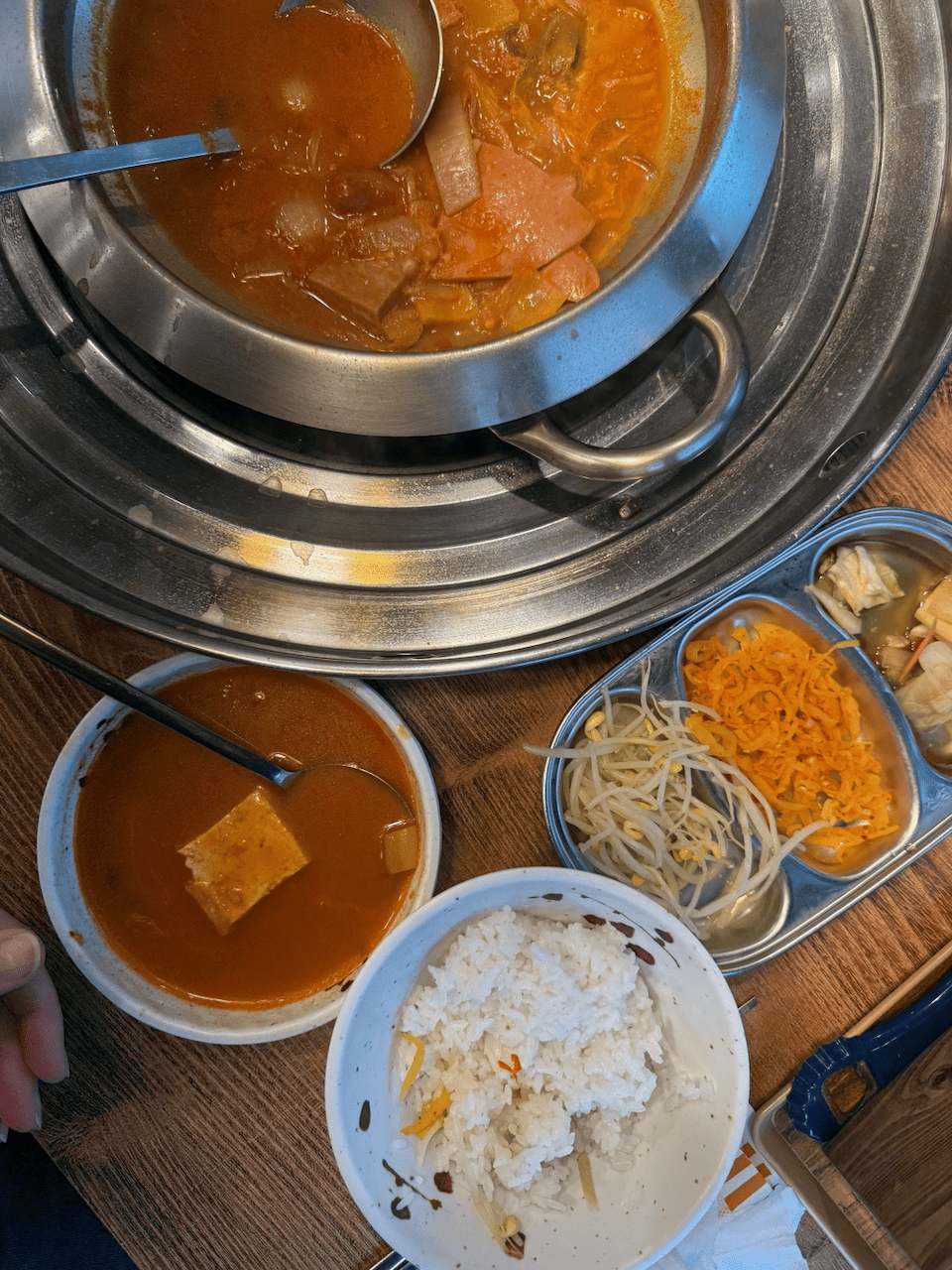
On its own, this makes a big, satisfying dinner for two. To serve more people, add another item like gochujang chicken stir-fry, steamed rice, and a few Korean side dishes (banchan).
Ingredient Substitutions
One of the best things about Korean Army Stew is how flexible it is. You can easily swap ingredients based on what you have on hand or your dietary preferences. Here are some common substitutions:
Korean Army Stew Without Spam
If you don't have spam or prefer to skip it, try these alternatives:
- Bacon: Adds smokiness and saltiness similar to spam
- Ham: Any thick-cut deli ham works great
- Canadian bacon: Less fatty but still flavorful
- Extra sausage: Just double up on the smoked sausage or hot dogs
Korean Army Stew Without Hot Dogs or Sausage
Skip the processed meats entirely with these options:
- Ground pork or beef: Brown it first, then add to the pot
- Mushrooms: Shiitake or king oyster mushrooms add meatiness and umami
- Extra tofu: Use a full block instead of half for a vegetarian version
No Kimchi? Try These
- Sauerkraut: Provides a similar funky fermented flavor
- Fresh cabbage: Won't have the fermented funk, but still tasty
- Pickled vegetables: Any spicy pickled veggies can work in a pinch
Gochujang Alternatives
- Sriracha + miso paste + sugar: Mix 2 tablespoon sriracha, 1 tablespoon miso, 1 teaspoon sugar
- Gochugaru (Korean chili flakes): Use 2-3 tablespoon with a splash of soy sauce
- Regular chili paste: Add miso or soy sauce and a pinch of sugar
Processed Cheese Substitutes
- American cheese slices: The best alternative-melts similarly
- Velveeta: Melts nicely into the broth
- Cream cheese: Adds creaminess but won't melt the same way
- Skip it: The stew is still great without cheese, just less creamy
Ramen Noodle Alternatives
- Udon noodles: Thicker and chewier, adjust cooking time
- Rice noodles: Gluten-free option, cook separately and add at the end
- Glass noodles: Lightweight and slurp-worthy
- No noodles: Serve with plenty of steamed rice instead
Homemade Stock Instead of Ramen Seasoning
If you want to skip the instant ramen packet and use fresh noodles with homemade broth, I recommend boosting the addictive flavor with a sprinkle of msg!
Frequently Asked Questions
This is a fairly salty dish with a lot of processed food in it. That said, you can customize it to make it suit for your dietary preferences. Add less sausage, more veggies and tofu, use homemade stock, and suddenly you have something kind of nutritious!
Yes! Skip the meat products and double up on tofu, mushrooms, and veggies. Use veggie stock or a vegetarian ramen packet, and swap the processed cheese for a vegan alternative like Daiya (which melts pretty darn well).
Gochujang is pretty easy to find in most grocery stores these days, and you can definitely get it online. But if you can't find it, you can substitute with a mix of chili paste for heat, miso paste for salt/umami, and a sprinkle of sugar or honey for sweetness.
*NOTE: If you want to get nerdy about gochujang, America's Test Kitchen did a really in-depth review. Check it out here!
You can chop all your ingredients ahead of time and store them in the fridge, but I recommend cooking it fresh since it only takes 10 minutes. The noodles will get soggy if you make it too far in advance.
Army Stew isn't ideal for leftovers, because the noodles just keep on absorbing the broth overnight. However, it is possible to store leftovers in an airtight container in the fridge for up to 2 days. You may want to add a splash of water or stock when heating it back up.
Yep! Instant ramen is traditional and convenient, but you can use udon, rice noodles, or even glass noodles. Just adjust the cooking time based on your noodle choice and add your own stock or seasoning if not using the ramen packet. You can also skip the noodles altogether and serve this with rice instead!
Korean Army Stew has a complex, savory flavor profile that's spicy, slightly sweet, and incredibly umami-rich. The kimchi and gochujang provide a spicy, tangy kick, while the smoked sausages and spam add smoky, salty depth. The processed cheese melts into the broth, creating a creamy, indulgent base that balances the heat. The baked beans add subtle sweetness, and all the flavors meld together into a comforting, addictive stew that's both familiar (thanks to the hot dogs and cheese) and distinctly Korean.
Korean Army Stew, or budae jjigae (부대찌개), literally translates to "army base stew." It was invented in the 1950s following the Korean War, when food was scarce in South Korea. People living near U.S. military bases would use surplus ingredients from the army bases-like spam, hot dogs, and baked beans-and combine them with traditional Korean ingredients like kimchi and gochujang to create a hearty, filling meal. What started as a necessity became a beloved comfort food that's now popular throughout Korea and beyond.
Most Korean Army Stew ingredients are easy to find these days. Kimchi, gochujang, and Korean rice cakes are available at Asian grocery stores, and increasingly at regular supermarkets in the international aisle. You can also order them online from H-Mart, Iherb, or Amazon. The other ingredients-ramen, hot dogs, spam, sausage, tofu, and processed cheese-are standard grocery store items.
I hope you love this stew as much as I do! Let me know if you get hooked!

Korean Army Stew Recipe (Budae Jjigae) - Easy 10-Minute Meal

Equipment
- Wide, shallow pot or skillet
- Cutting board and knife
- Stovetop or portable burner
Ingredients
- 1 onion small
- 1 leek white parts only
- 4 cloves garlic
- 30 grams leafy grams small handful
- 100 grams kimchi
- .5 block tofu firm or medium-firm
- 1 smoked sausage or hot dog
- 4 slices spam cut to the thickness of your liking
- 1 tablespoon gochujang more if you like heat
- 100 grams baked beans
- 4 cloves garlic
- 1 ramen packet with seasoning or make your own stock
- 2 slices processed cheese
- 1 liter hot water
Instructions
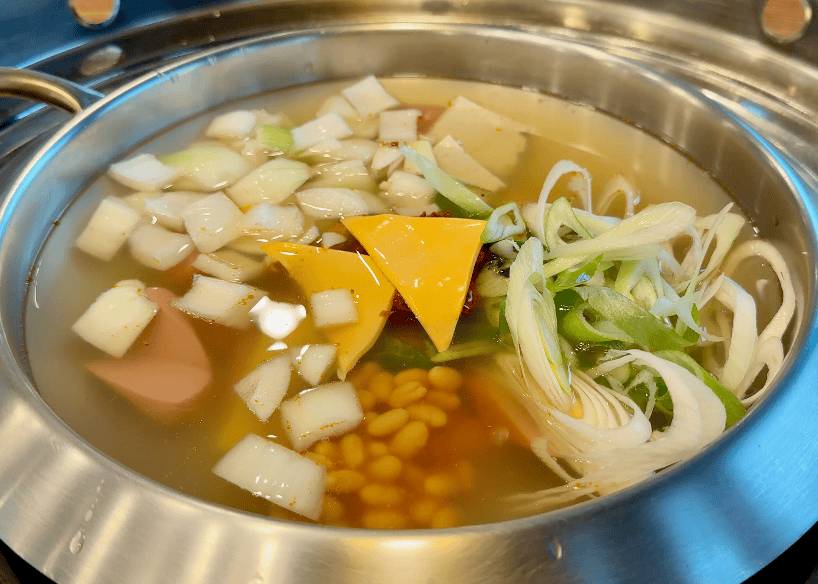
- Arrange everything in a pot. I like to use a wide skillet or a shallow cast enamel pot with a lid. Try and nestle the noodles and cheese on top of the other ingredients so they take a bit longer to sink down and cook, allowing the onions and leeks to soften first.Partially cover the ingredients with hot water and bring the whole thing to a boil. Add a bit more water if needed.Cook, stirring occasionally, until the noodles are cooked and the onions and leeks are soft.
Video
Notes
- Please note that I NEVER measure the ingredients for this, so all measurements are approximate. You can customize this to your heart's content.
- In terms of what type of ramen packet you use, it's totally up to you! I like Shin Black because it has a really meaty flavor, but I've used many other kinds as well.


So easy and addictive!